Like us on Facebook!
NCNS Archives
-
Join 773 other subscribers
Feature Artist – Don Lewis
Written By Darryl Kicul March 2025

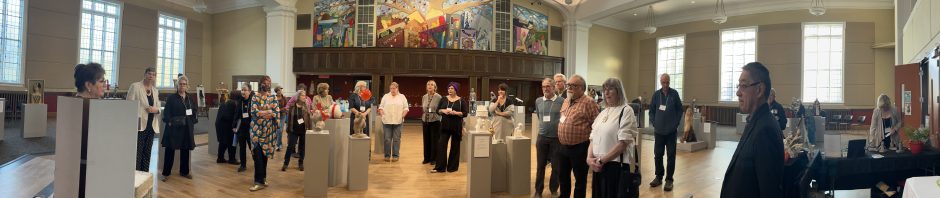
Last October, the National Capital Network of Sculptures (NCNS) hosted Sculpture Expo at the Glebe Community Centre. During the show guests had the opportunity to vote for the “People’s Choice Award. Don Lewis was one of two artists chosen.
Don is a sculptor and stone carver. He uses his tools and his stone to tell stories, teach lessons and to help heal the natural world. His work is detailed and often invokes discussion.
Growing up in Sarnia, Ontario Don spent his formative years exploring the woods and creeks near his home. He recalls that his earliest influence was the children’s book “My Side of the Mountain”. He began to do sketches and watercolours of the wildlife that he encountered. He was also developing a growing awareness of the damage that humans were causing to the natural environment that he was exploring. With this background, he travelled to The University of Guelph where he completed a degree in Biology. All of his electives were focused on fine art, specifically drawing and sculpture. While at University, Don was introduced to sculpting by well known sculptor, John Fillion (his work Reclining Figure is a public artwork on St. Clair Ave in Toronto), who was one of his professors. He began to explore the works of Henri Moore and Constantin Brancusi as well as the more realistic works of Rodin and Michelangelo. He fell in love with the bite of the chisel and the power and permanence of stone. Don found that using stone as a medium allowed him to capture the power of the life force and at the same time the fragility of life.
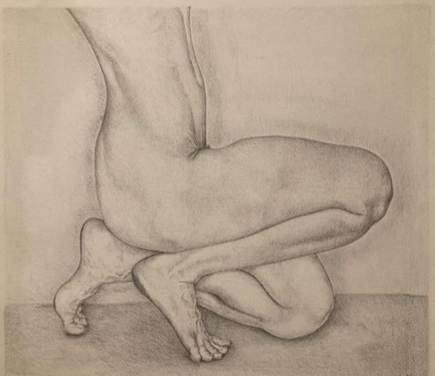
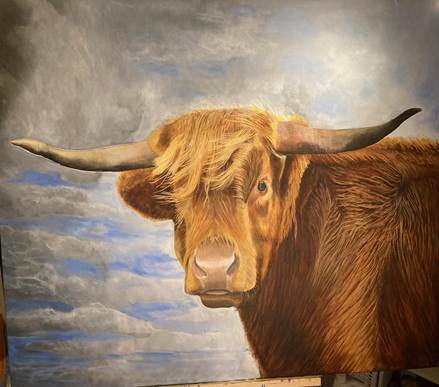
After graduation, Don started an environmental consulting company and started a family. These two strands would have a significant impact on his artistic development. The cancer death of his first wife left him with a business and two children under 5 years of age. His second wife, Andrea with whom he also had a child, is a great supporter of his artistic endeavours. On the business side, Don began to feel a growing disconnect between his environmental principles and the direction that his industry clients were going. The call of the studio was growing louder.
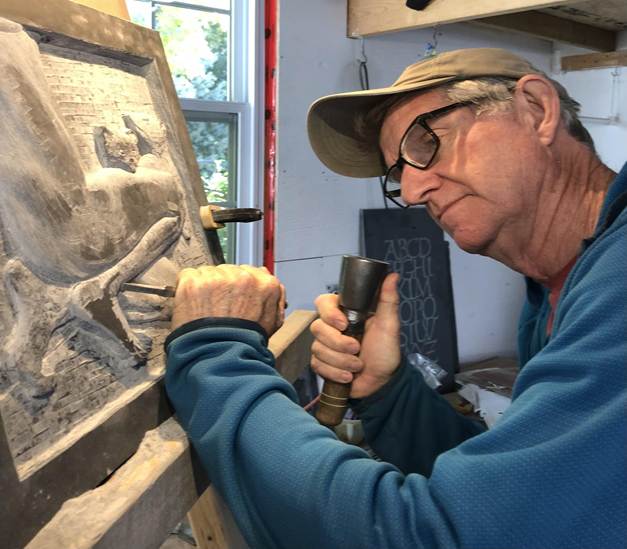
After a move to Ottawa, the path to returning to his art was much clearer. Don discovered Smith and Barber Sculpture Atelier and Danny Barber (NCNS Feature Artist June 7, 2019). It became a place where he could take courses, learn new techniques, get technical support and share ideas with other artists. The “open studio” time at the Atelier really helped him discover the direction he wanted his art to go in.
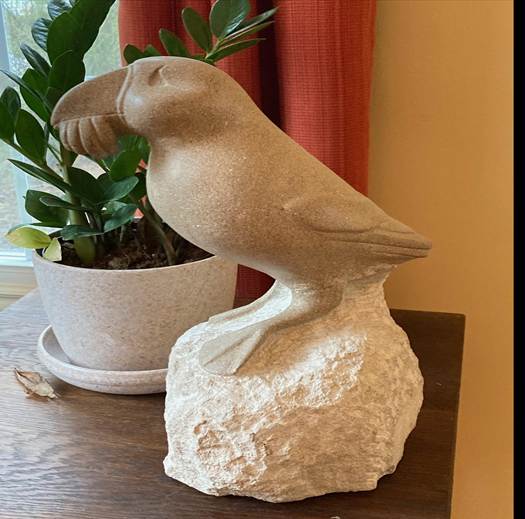

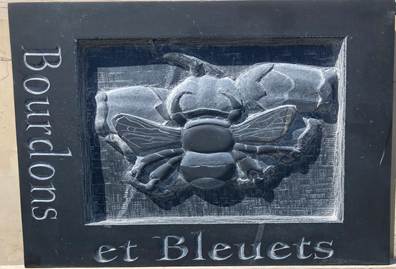
Don is a sculptor who works by taking material away until the desired sculpture is achieved. As he begins a new project, he usually spends a significant amount of time doing research. A recent piece completed for the Canadian Stone Carving Festival called “Bourdons and Bluets” reflects the intersection of his research and his art. He learned how bumblebees were under threat from diseases brought to North America by honey bees imported from Europe. His work shows the connection between bumblebees and blueberries and illustrates how one can not survive without the other.
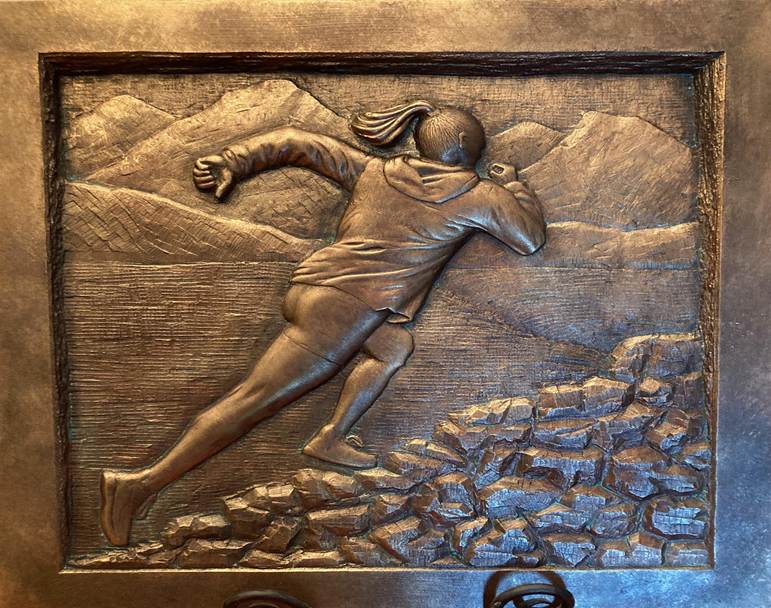
Although Don designs his work to be appealing to the eye, he also intends to create works that challenge the viewer or to elicit a certain amount of discomfort. He is pleased when the work generates discussion among the viewers. His current focus is on carving stone that reflects both the enduring quality of nature but also the fragility of life. He often explores how nature is vulnerable to our actions and how we have a responsibility to protect the living world. He notes that more recently his work reflects the connection we have with nature and how we often ignore it. He notes that the recent reconciliation movement and empowerment of indigenous communities has been a hopeful sign that this change might happen. Society can learn much from the indigenous community. They have continually demonstrated that we are connected to nature, that nature must be respected and that our fate rests in keeping the planet healthy.
When asked about his least favourite part of the sculpture process he notes that it is finishing a project and knowing when it is time to stop. He has learned that a work is complete at a point at which his technical skills meet the complexity of the idea and the limitation of the stone. This is an ever changing dynamic that of course can be influenced by time restraints.
Don acknowledges that sculpture is time consuming. But it is also a physical activity that includes technical and mental elements. He says he will continue to focus on traditional techniques and limiting his use of power tools. He feels that the time he has spent learning his tools and his traditional techniques has helped him build a strong foundation upon which to build his art.
Don plans to show more of his work in public. He has participated in the Canadian Stone Carving Festival for the last six years. In addition,he participated in the Art in the Park festival in Ottawa in the spring of 2024.
Stone carving is not a speedy process. Don notes he has many ideas, but getting them carved becomes more difficult. As the complexity of his ideas and his carving grow, they also take longer to produce. He hopes to do some of his future carving in wood in order to speed up the process. He also plans a return to drawing and painting to help capture his ideas.
As the participants at Sculpture Expo noted his work is outstanding. We cannot wait to see what he comes up with next.
Feature Artist – Wolfgang G. Mohaupt
By Paula Fraser
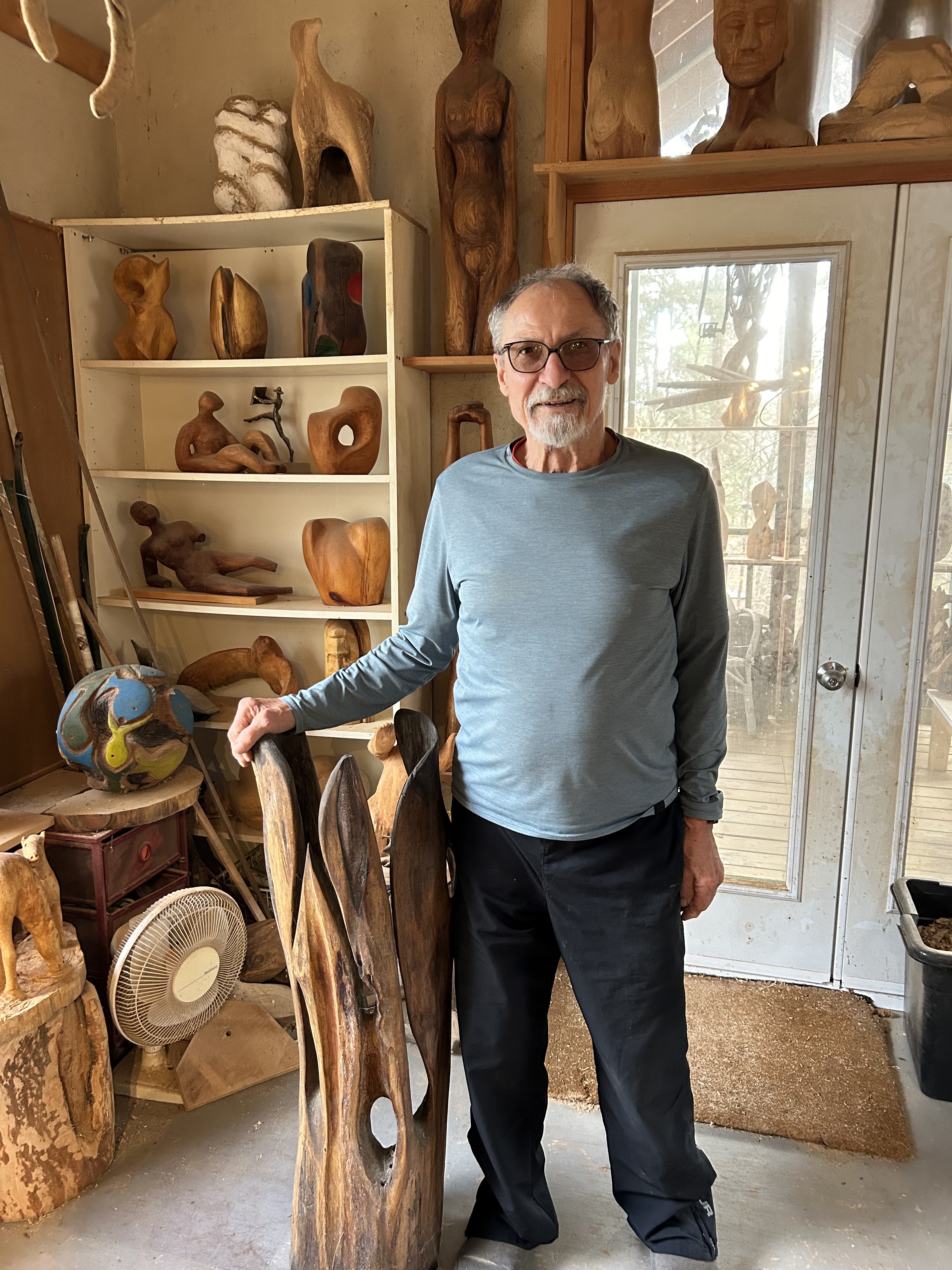
I would like to introduce to you, Wolfgang G. Mohaupt, who is a Wood Sculptor and member of The National Capital Network of Sculptures. Wolf was born in Germany in 1940, his mother was a pianist and his father was in the German Navy. He immigrated to Canada in 1953 where he attended high school in Cambridge, Ontario.
He attended the University of Toronto between 1959 to 1964 where he obtained a degree in Architecture. After graduation Wolf worked in Ottawa for Hart Massey Architect and Minto Construction before starting his own architectural firm.
Wolf’s father was good at everything from music and painting to welding. He followed his father’s path and is also skilled with his hands. Water colour and plein d’air drawing was his first experience with art. In high school he also took art, so it has been part of his whole life. Wolf has traveled widely and has seen many of the major museums and art galleries around the world.
While working for Minto Wolfgang developed an interest for sculpting. His inspiration came from working as a coordinator with various artists including Bruce Garner. Bruce had a big influence on Wolf and eventually they became good friends. After building a house on McGregor Lake in Val de Monts Quebec in 1980, Wolf started working on wood sculptures before retiring from architectural practice and built a separate studio a few years later.

Wolf likes to choose pieces of wood that have character. His sketches are minimal and he likes to integrate the organic parts of the wood into his sculptures. Movement is also a major aspect of his art as it draws the eye into all the interesting parts of his pieces. Sanding the wood is his least favorite part of the process.
For anyone who is interested in sculpture Wolfgang suggests experimenting with various media to see what grabs you. Art school and learning from other artists are also very good avenues to start with. A knife and a piece of wood to whittle away is a good way to begin wood sculpture.
You can visit his 20-foot-tall sculpture, called Timber, that he designed for a condominium at 808 Bronson Avenue.

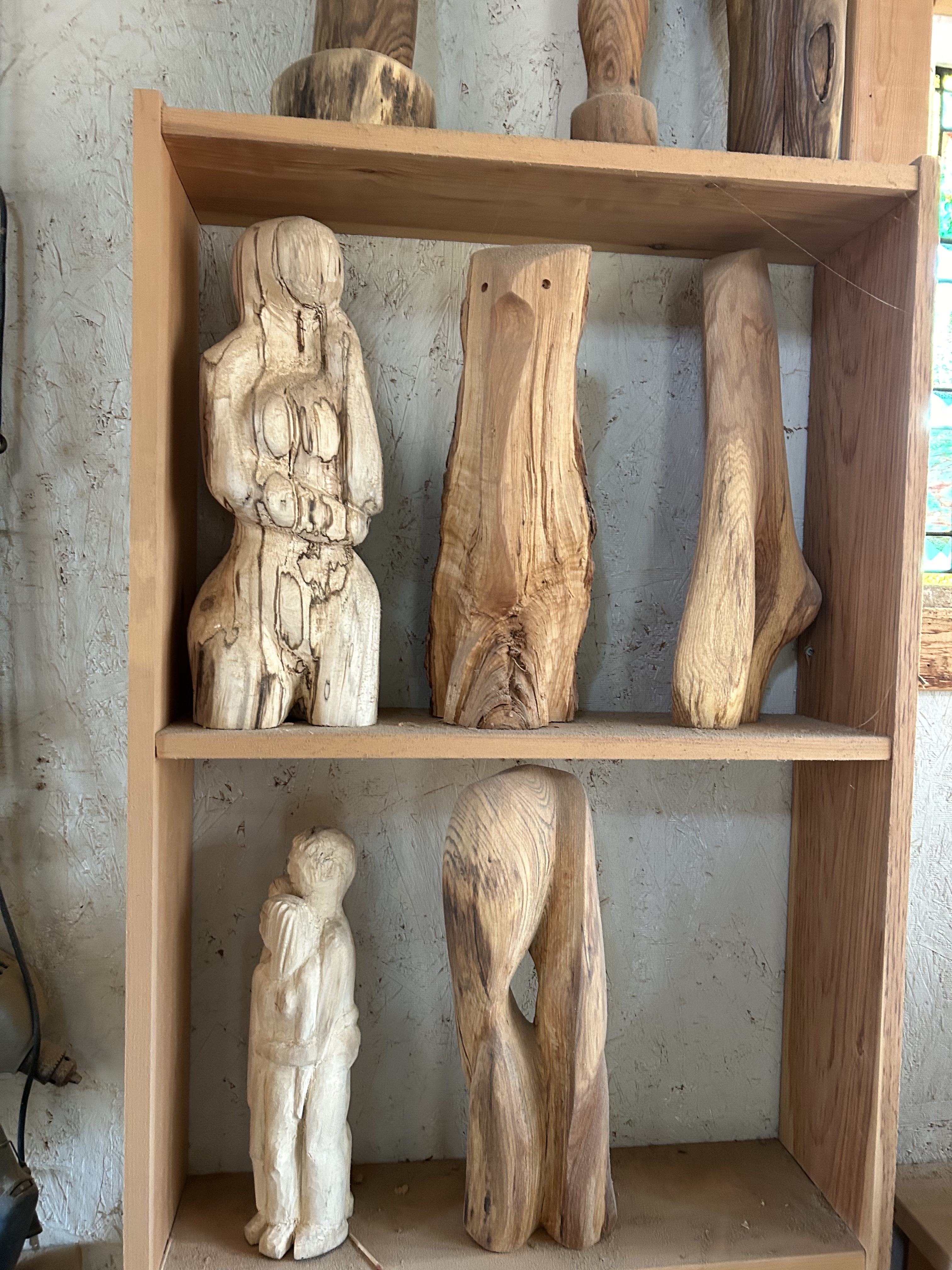
Perhaps working with soapstone or doing more commissions are his next steps. He is always on the lookout for new subject matter to keep things interesting and exciting.
Wolf would welcome anyone interested in more information or a studio visit. Please see his website WMwoodSculptures.com. He can easily be reached by email at wolfmohaupt@icloud.com.
I also want to say that it has been an honor for me to meet and interview Wolf to be able to write this,
Paula Fraser
The Community Tree
A Collaborative Art Project by The National Capital Network of Sculptors and the Boys and Girls Club of Ottawa, Taggart Parkes Family Clubhouse
It took almost a year from the moment the National Capital Network of Sculptors pitched this idea to the new Boys and Girls Clubhouse at 1770 Heatherington Avenue, to the day we officially unveiled the finished mural.
We spent most of the summer of 2023 collecting beads, glass, bits and pieces of ceramic, polymer clay, stone and wood as well as painting and prepping round wooden plaques for the kids to work on. Jim Lawrence collected and cut over 100 natural wood rounds as well as pieces of bark and drift wood. Rosemary Breault Landry built and painted the base design of the 4 x 8’ panel and Maria Saracino put together a team of artists to run the 5 workshops we held at the Boys and Girl Club. Each session was assigned to two artists who were responsible for a particular colour theme. The kids who joined the workshops made at least 2 mosaic rounds each and several BGC staff joined in the fun too.
Once the workshops ended and the children’s work had dried, another team of NCNS members began working on assembling the mural. Using the underpainting as a guide we colour-coordinated the rounds to the colours on the painting. This process took 3 weeks to complete. The final step was pouring the resin coating. The resin gives the work a protective glossy finish and locks all the bits and pieces together. We let the resin rest and cure for several weeks before the mural was installed on the cement block wall in the lobby area of the Boys and Girls Club.
During this time Bernadette Alcock took pictures, designed and created two interactive books that the kids use to identify and find some of the hidden treasures in the mural.
The official unveiling took place on May 22, 2024 and in addition to covering all the costs of this mural, the National Capital Network of Sculptors continues to show our support of the Boys and Girls Clubs of Ottawa with a donation of $500 as well as ongoing workshops at two clubhouses.
Participating Artists: Rosemary Breault Landry, Maria Saracino, Patrick Imai, Olga Kay-Grigoriev, Carolyn Sandor, Maggie Wesley, Bernadette Alcock, Paula Fraser, James W Cook, France Grice, Hengameh Kamal-Rad, Jim Lawrence, Sandra Marshall, Helen Rogers, Ljiljana Stojanovic
We would also like to acknowledge the many artists and volunteers outside our group who donated their time and supplies for this project.
Feature Artist – Olga Kay-Grigoriev
Wood Carver Defying Her Limits
by Sandra Marshall
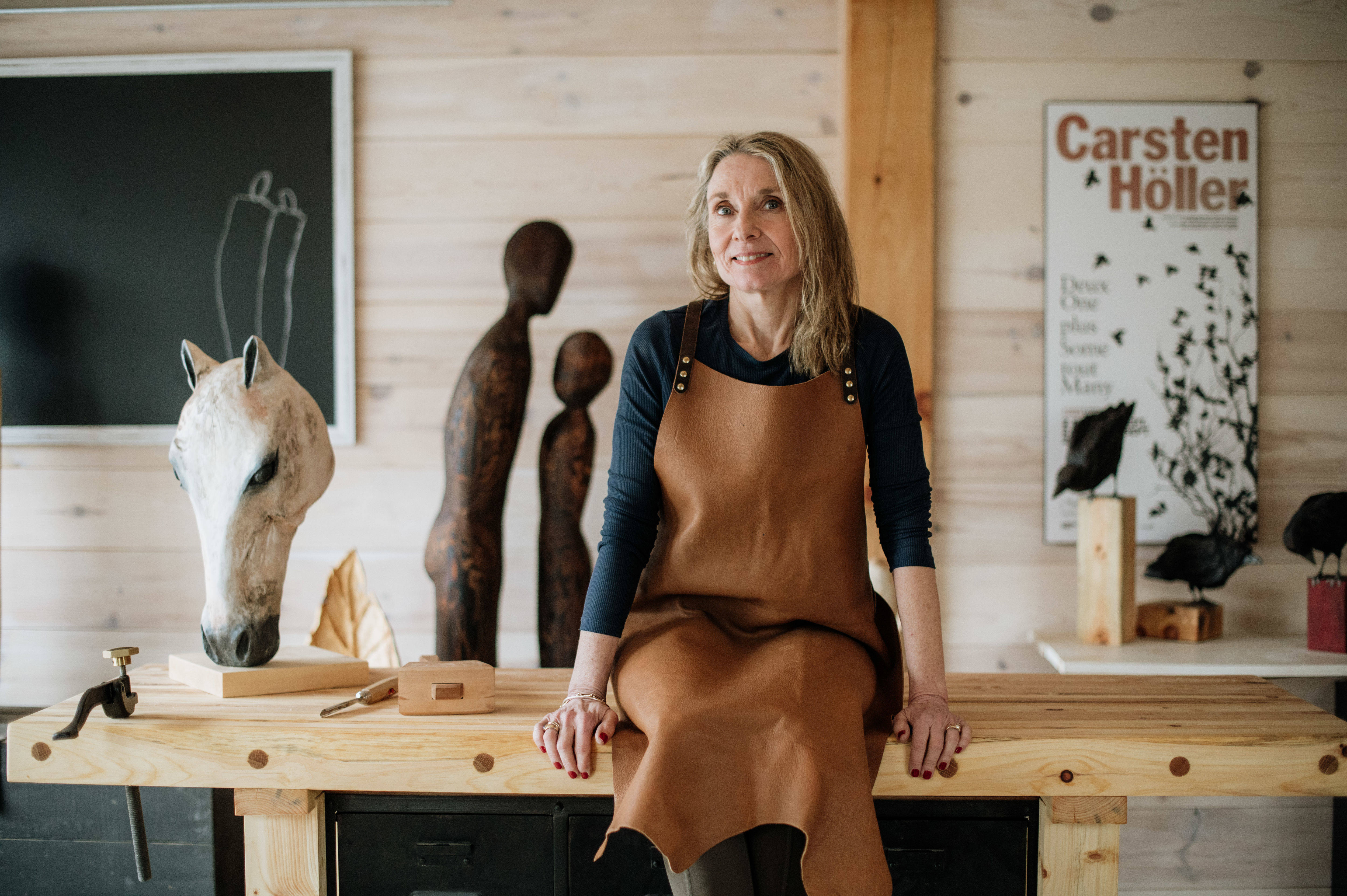
Olga Kay-Grigoriev had a varied early work career, first in non-profit, education sectors and motherhood. During those years art has always been close to her heart as she painted when she had free time. Olga now devotes her energies to painting and sculpture and especially to carving. In 2020, she answered her artistic calling after she retired as superintendent of education for the Ottawa Carleton District School Board.
Olga enjoys working in oil and acrylic, as well as print-making. At the Ottawa School of Art she recently added figure drawing to her skillset. However, the challenges of three-dimensional art have captured her spirit. She has built sculptures in papier maché, clay and metal, but she is most enthused while carving wood!
Olga Kay-Grigoriev’s passion for sculpture began in 2020 as she adapted to her new rural environment north of Ottawa in Val-des-Monts, Quebec. Trees surrounded her. They were her solace and her company.
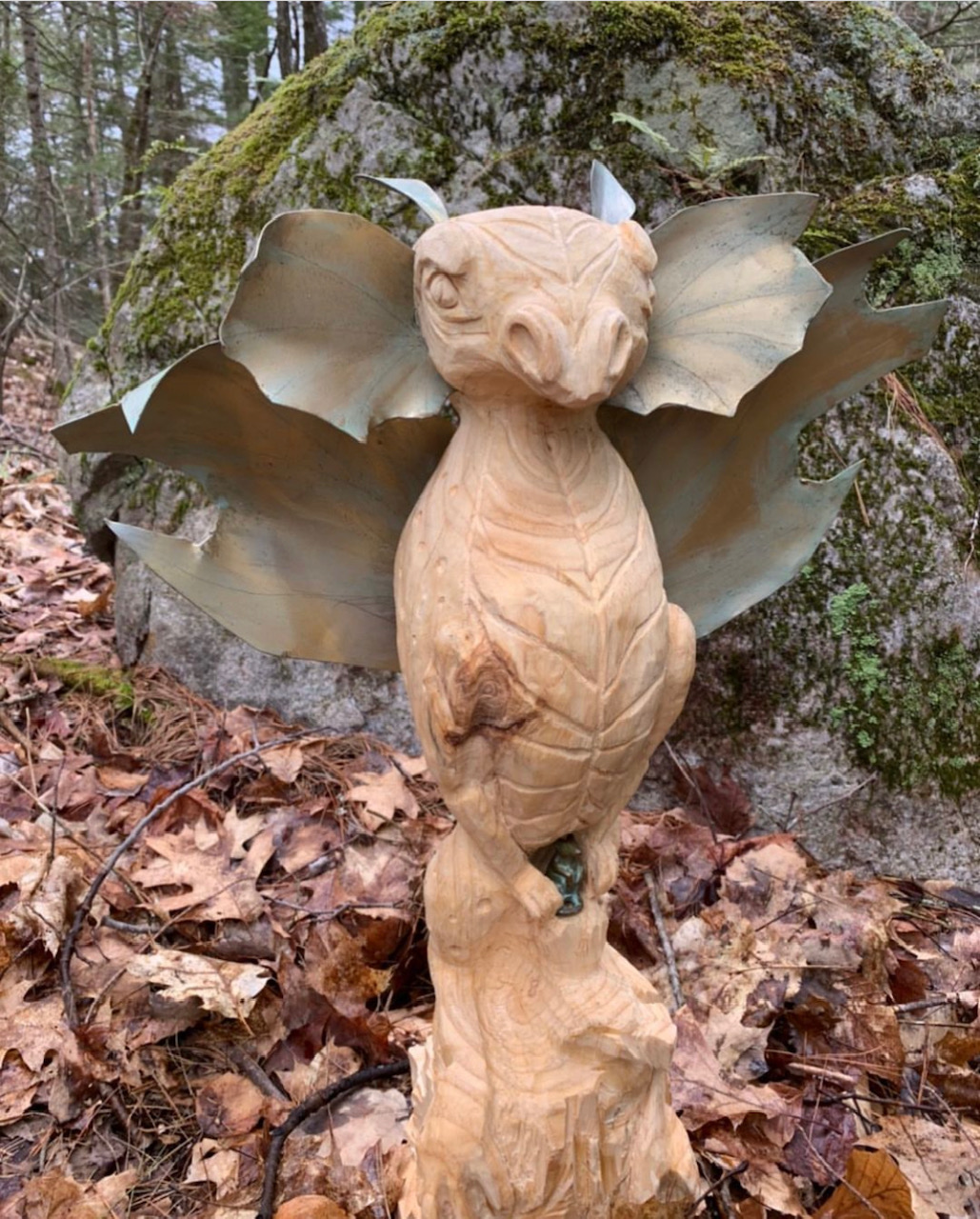
Trees offered plentiful wood to carve, however, as she had never carved before, she sought advice to get started. Happily, a long-time artist friend and Toronto-based instructor offered his support. Step-by-step, he helped Olga make her first wood carving, a fantastical woodland dragon.


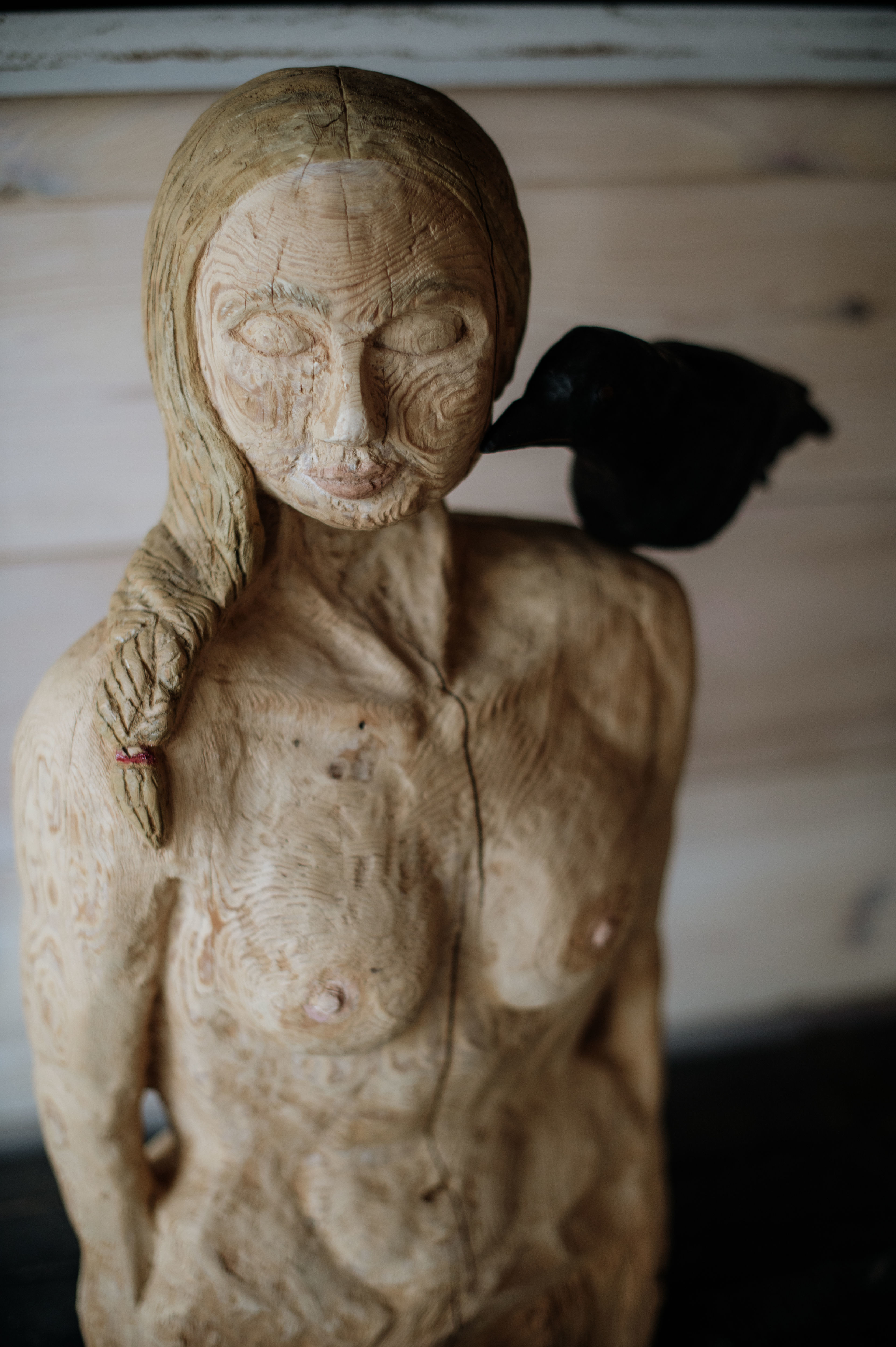
Another of her first figurative pieces, “She Hears Crow Songs”, is a favourite. “It was a difficult time for me then and I immersed myself in my work to have a concrete focus.” The sculpture was a “stretch goal” which she was uncertain she could attain, as it seemed beyond her skill level and she was carving on her own during Covid isolation.
“I took my time with every part of the sculpture, learning first about general body proportions, then how to carve specific details like the nose, mouth and eyes. I feel the piece is a good beginning effort and it conveys emotion and tells a story. The crow is a recurring theme in my work .”
Kay-Grigoriev was empowered by her new skills and continued to sculpt figurative pieces, telling her life stories of joy, love, loss, and sorrow through them. These emotions animate her sculptures of nature, animals and people. Abstract figurative sculptures populate the garden of her mind. “Sometimes thoughts and feelings just need to be worked out with a mallet and gouge.” A favourite shape could engage her imagination. And she might create a horse, a leaf or an ear.

The horse head sculpture is another that she is proud of. She chose to work from a live horse model in order to understand its proportions. She advertised locally for willing horse owners and received invitations to come and take measurements. The horse named ”Mjumaj “, was a good sport and was very tolerant of her ruler and calipers. This piece required reducing the horse’s proportions to a smaller piece of leftover timber.
Olga especially enjoys carving, perhaps because of its risk. “You must be completely focused on what you’re doing in order to avoid injury or lose a piece of your work.” Wood carving is a significant challenge: “Each time I create something new, I push myself to take it a step further. I love the combination of different materials so I have been incorporating castings in gypsum cement into the wood carving , trying to create a smooth transition between the two.” Her favoured wood species are pine and cedar and likes basswood for its consistent grain.
One of her preferred tools is the Lancelot, a round chainsaw which she uses to rough out the form and to add texture to pieces. She also uses it to add detail and movement to her birds. ”It’s somewhat dangerous to use because of the kick back, but it is effective.”
Kay-Grigoriev had the good fortune in 2022 to study sculpture in Florence, Italy. Over the period of a month, she took courses at the Leonardo da Vinci school and toured galleries in the heart of the Renaissance capital, marveling at the huge blocks of marble carved by the masters – without the modern tools and conveniences available to us now. She delights in that exposure: “Their work was exquisite, precise and hugely inspiring. While I generally like to work quickly and loosely, the time spent in Florence made me appreciate the value of slowing down and getting it right. I worked with clay during this time and learned to make molds , which I now use to add different elements to my wood designs. I love the juxtaposition and transition to different media within one piece. Wood next to cement or metal is particularly appealing to me.”
Olga begins her process with an idea which she draws or models as a maquette. Then, she searches for wood with suitable characteristics. Each piece, whether salvaged or harvested from the forest, has its own unique qualities which need to be considered for the project at hand. Size, grain, shape and hardness are all taken into account. The bark is stripped and the preliminary drawing is transferred to the piece.

The first tools to be used are from the chainsaw family. These cut away large portions of waste material. After some time spent at this stage, a roughed out form starts to emerge. Then Olga moves to a smaller sized round chainsaw. When creating many abstract figurative pieces, she employs a shaping disc with a regular angle grinder.
She also likes to use a die grinder with a variety of different burrs. This tool gets into the smaller spaces and allows for more detailed work. Hand carving with a mallet and gouge often comes next, depending on the grain and the look she is trying to achieve. The more detailed the piece, the smaller the size of gouge used.
Finally she is ready to sand and oil the pieces. For outdoor pieces, she has been experimenting with “shou sugi ban”, the Japanese method of wood preservation, which chars the wood with a propane torch.
If you would like to attempt wood carving, Kay-Grigoriev recommends starting with media that are easy to use like soap or Styrofoam before progressing to wood. This will help you understand the technique of removing material instead of building it up. Drawing practice will also help to visualize your work from different angles.
Most important, acquire some excellent safety practices from someone who is trained in operating the tools you’ll be using. Many of them are dangerous and that is not something you want to take lightly!
The favourite part of the sculpture process for Olga is when an idea for a new piece appears to her. It’s a creative light bulb. Everything is bright! Her least favourite part is the sanding. It’s tedious and painstaking, with sawdust flying everywhere. She is not fond of wearing the respirator mask either, but it’s essential during this stage. This is the life of an artist carver!
Kay-Grigoriev plans to complete some larger outdoor installations and she aspires to create art for public spaces. Next year, she will collaborate on a project with another artist. A show is in the works for 2025 which will combine paintings on canvas with complimentary wooden sculptures.
Olga is always open to new opportunities and welcomes commissions. Her plan is to keep honing her skills, along with her tools, and learning from carving masters wherever they are found.
You are invited to see her work currently at the Kanata Civic Art Gallery, the Galerie Old Chelsea and at her studio in Val-Des-Monts, Quebec, by appointment.
On Instagram, please visit : @mes_sculptures_en_bois
Posted in art classes, Art Shows, Art Workshops, Artist of the Month, Canadian Stone Carving Festival, ceramic, Ceramic Sculpture, clay artists, clay sculpture, Exhibition Opportunities, glass sculpture, Kanata Civic Art Gallery, learn how to sculpt, Member Event, Member Profiles, Metal Art, Miscellaneous, Network Show, Online Art Gallery, paverpol, polymer clay, sculpting workshops, Sculpture Atelier, Sculpture events, sculpture show, Stone Carver, stone carving, stone sculpture, The Boys and Girls Club of Ottawa, The national capital network of sculptors, Wood Carving, wood sculpture, workshops
Tagged art, art in the capital, creativity, exhibition, Kanata Civic Art Gallery, Mixed Media, mosaic, olga kay-grigorev, Ottawa Art, Ottawa Art Community, ottawa artists, sculptors in ottawa, Sculpture, sculpture in ottawa, wood carver
Leave a comment
Feature Artist – Maggie Wesley
Artist Explorer
by Sandra Marshall
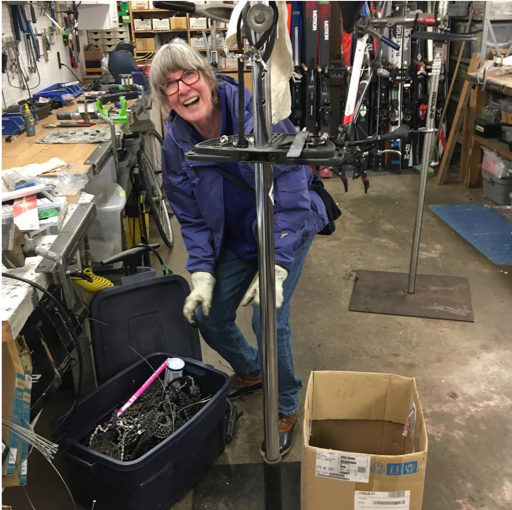
Maggie Wesley is an artist-explorer, adapting traditional art forms, painting and sculpture to her own 3-D language. Her passion today is in using recycled materials in artistic ways.
Wesley’s creative life began on the family farm near Perth Ontario. Everything on the farm had a purpose, and she loved the challenge of giving a new life to the time-worn. Discarded cooking utensils, aged wood and farm implements have all become part of her three-dimensional creations.
Helping others is also intrinsic to Wesley’s nature. She began a career as a registered nurse with a psychiatry specialty. As years passed, her creative urge grew and drew her to a four year fine arts program at OCAD in Toronto. Initially attracted to painting, her real passion was found in creating three dimensional objects which honed her many skills in painting, carving and woodworking, talent that you can see in the work on her website https://www.maggiewesley.ca.
During her time at OCAD, she initially took woodworking courses to create stretcher frames for her paintings, but unexpectedly she fell in love with wood and the process of crafting three dimensional objects. At the time Maggie discovered the qualities of wood, she had been assisting her family in dismantling the old homestead and building anew. The discards provided her with a wealth of aged building materials that had acquired a natural patina and texture, that captured her admiration. The deconstruction of the old building offered plenty of old wood, wall board, plaster lathe and household hardware, inventory for many future 3D creations.
Wesley began applying paint to the 3D, often wood canvasses, to highlight shadows. She uses colour to emphasize depth of field. For Wesley, “Shadows allow the interplay between light and dark, highlighting contrasts, so important in my work. For me, shadows symbolize the passage of time.”


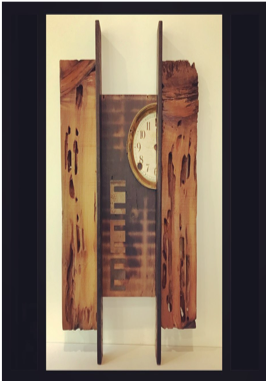
Initially Wesley’s sculptures respected the natural properties of the wood and found objects with a very limited palette. With time, she engaged differently with her recycled objects, experimenting with the introduction of colour for wood sculpture. If using recycled metal, then wood becomes her unifying medium and colour is an accent.
She loved woodwork as the old textures and patina came alive again under her lively imagination. Post-graduation, this was the impetus for designing a woodworking studio to concentrate her painting, carving and woodworking skills and recycling of materials into 3D art. This journey challenged her self-taught construction abilities as a worker and contractor. Happily, this new direction led to the acquisition of her artwork by the City of Ottawa and Nepean collections.
Then a new adventure began. Maggie states that “Once again, love guided my efforts.” She worked with her husband to build a new home, as they engaged their muscle in the many trades of home construction. She is resourceful- Her skills sharpened and expanded to harvesting trees on their rural Woodlawn property for cabinet making and finish carpentry. Since retiring from nursing in 2015, Maggie now directs her full attention to her art. She continues her 3-dimensional journey by participating in group art shows in Ottawa area galleries.
Always opportunistic, bicycle parts and gears became a theme for a series of work when the parts became available to her. She developed quite a collection while rescuing them from the landfill. Each of her pieces is refined and transformed until Maggie finds the sense of harmony that she seeks between decay and creation. She connects the history in the reclaimed objects in the reanimated story of her 3D sculpture. They may suggest a narrative of evolution and rebirth, of known spaces in past use. Her exploration of known spaces, past history, and more recently the human figure, allow the viewer to connect on a more personal and emotional level.
Wesley’s favourite project activity is when she is challenged to see and connect with the art potential in her found objects. Her problem solving work requires multiple tools – chainsaw, drills, Dremels, chisels and other tools, each requiring a different and new skill set.
Recent pieces were assembled using old woodworking planes. These unique sculptures allow the spirit of these handmade planes to continue life as artwork.

Over time Maggie’s works have grown smaller, but her diverse tool skills allow her to see opportunity in working on larger objects. An opportunity to acquire multiple boxes full of rusted 1930 car parts has Maggie enthusiastic about her next sculptural adventure “I love the texture and forms of those parts” They inspire the creation of a new sculpture series.
See more of Maggy’s work at www.maggiewesley.ca
Posted in art classes, Art Shows, Art Workshops, Artist of the Month, Canadian Stone Carving Festival, ceramic, Ceramic Sculpture, clay artists, clay sculpture, Exhibition Opportunities, glass sculpture, Kanata Civic Art Gallery, learn how to sculpt, Member Event, Member Profiles, Metal Art, Miscellaneous, Network Show, Online Art Gallery, paverpol, polymer clay, sculpting workshops, Sculpture Atelier, Sculpture events, sculpture show, Stone Carver, stone carving, stone sculpture, The Boys and Girls Club of Ottawa, The national capital network of sculptors, wood sculpture, workshops
Tagged art in the capital, Kanata Civic Art Gallery, maggie wesley, Mixed Media, mosaic, Ottawa Art, Ottawa Art Community, ottawa artists, sculptors in ottawa, Sculpture, sculpture in ottawa
1 Comment
Artist of the Month – Helen Rogers
Bold sculptural inspiration with mixed media
by Sandra Marshall
Helen Roger’s love of art is evident in her vibrant expansive multimedia works with her signature
bright mosaic gems.

After a university training in education and psychology, Helen Rogers quickly determined that teaching art would be her calling. Her lifelong passion for art was furthered when she took a teaching sabbatical to follow studio art courses. Helen returned to teaching art, while also exploring more art workshops and courses in Alberta, British Columbia and the State of Washington in which she mastered the techniques of
watercolour, acrylic and oil painting. Helen was inspired by work in 3 dimensions and she joined the Sculptors Association of Alberta, improving her skills sculpting solid materials: wood, clay, concrete, stone, welded steel, and ice. Always weaving her new skills into her art classes, Helen soon realized that sculpture was her artistic element. Even her two dimensional art is livened with elements of sculpture.
Rogers continued teaching art until she retired and she and her husband moved to Ottawa from Alberta to be closer to their daughter. In her new Ottawa environment, Helen joined several art groups – the Ottawa Mixed Media Artists, Ottawa Arteast, National Capital Network of Sculptors – exploring many different materials and new perspectives. But a trip to Italy and Spain kindled a love of mosaics, especially the massive mosaic works of Nikki de Saint Phalle and Antoni Gaudi. The spark that they kindled inspired Helen to teach herself this craft. She attended mosaics conferences and workshops to enlarge her perspectives. Today they form part of her
signature mixed media sculptures.
Helen Rogers rarely begins a project with a plan. Her “supply” room provides the inspiration –
as her daughter says – “Creative people never have a mess, they just have ideas lying around
everywhere“. She connects a few scraps with others until an idea takes shape and art emerges.
The spark is ignited and she know exactly how to proceed. Sometimes this happens during a
sleepless nighttime period of incubation where she discovers her solution and can then sleep in
peace. But in one less peaceful mosaic project, she employed a black grout and when she
realized that the grout should have been white, it was too late to go back! Usually her work in
the construction phase can be undone, but not with cement grout.
Lesson learned.

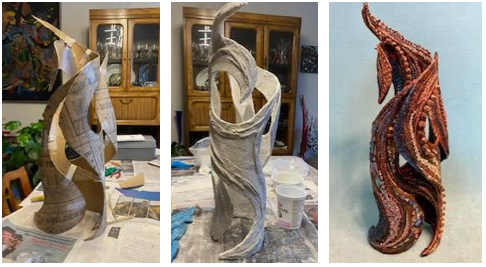
Helen says that there is no philosophical meaning in any of her sculptures. The onlooker can decide what they see. If a viewer is curious about the process, Helen is happy to explain: Step 1. Choose a substrate. In the case illustrated, a construction tube has been cut up and taped together to form the base structure.
Step 2. Cover the structure with plaster-infused bandage, adding more texture as needed. Step 3. With tile adhesive, apply mosaic materials such as pieces of stained glass, tiles and mirror to chosen parts of the sculpture surface. Then apply grout to all this and then wipe off the excess and leave overnight to harden. Next day, Helen adds crushed tin foil to some of the sculpture using a glue gun. She adds embellishing materials- glass beads, wire, eucalyptus
seed pods, pieces of copper, and anything else that might work to finish the surface to her satisfaction. Lastly, she decides when enough is enough and declares the sculpture finished!
Helen Rogers has no concrete plans for her art, except to enjoy the process of making, and she
is quite content with that. Helen does not like marketing and has decided that she doesn’t need
that stress. Post covid recently, she felt privileged to be able to conduct a two day mosaic
workshop at the Boys and Girls Club. Ten children of various ages participated in the workshop:
One foot square IKEA mirror-frames donated by a member of Ottawa’s Network of Sculptors
were used as the mosaic ground. Rogers had assembled many different coloured tiles and
glass beads for the kids to mosaic the mirrors. Their imaginations were inspired. They all had a
wonderful time!

Her advice to novices is to do what you enjoy doing. Whatever art you enjoy, just do it! Helen knows both artists with formal training and those without can be equally successful. Selling your art requires marketing skills. Sometimes not-so-great art can sell with great marketing. So if you want to sell your art, learn good marketing skills or find someone to do this for you.
One thing Helen Rogers is sure of – She LOVES building things from scratch. If it becomes a successful work of art, that is a bonus!
See more of Helen’s work at http://www.Helenmosaics.ca
Posted in art classes, Art Shows, Art Workshops, Artist of the Month, Canadian Stone Carving Festival, ceramic, Ceramic Sculpture, clay artists, clay sculpture, Exhibition Opportunities, glass sculpture, Kanata Civic Art Gallery, learn how to sculpt, Member Event, Member Profiles, Metal Art, Miscellaneous, Network Show, Online Art Gallery, paverpol, polymer clay, sculpting workshops, Sculpture Atelier, Sculpture events, sculpture show, Stone Carver, stone carving, stone sculpture, The Boys and Girls Club of Ottawa, The national capital network of sculptors, wood sculpture, workshops
Tagged art in the capital, helen rogers, Kanata Civic Art Gallery, Mixed Media, mosaic, Ottawa Art, Ottawa Art Community, ottawa artists, sculptors in ottawa, Sculpture, sculpture in ottawa
Leave a comment
Artist of the Month – James W. Cook, Ephemeral Sculptor
by Sandra Marshall

James W Cook was born in Sudbury and grew up in Kirkland Lake. Always a natural in the visual arts, he always excelled in all art classes at school. Anything to do with visual arts, it seemed that he ‘’knew it from somewhere’’ and launched right in enthusiastically.
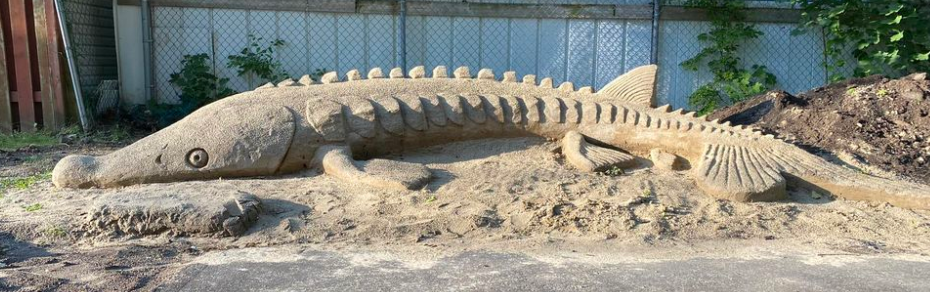
In 2012, Cook lost his last day job and has been a full time artist ever since. Operating out of Sudbury, he sculpted his first pieces in ice during the winter of 2015. In the spring of 2016, he moved to Ottawa, a strategic move placing him close to Winterlude for carving ice and Merveilles de Sable for sand, and for engaging the city’s vibrant arts scene.
Snow had been his main medium for exploring sculpture. Sand was always fun for him too. Cook expanded and refined these as more ephemeral additions to the other mediums he uses. He surprised himself in the enjoyment he found carving with limestone and soapstone and he wants to explore these more.

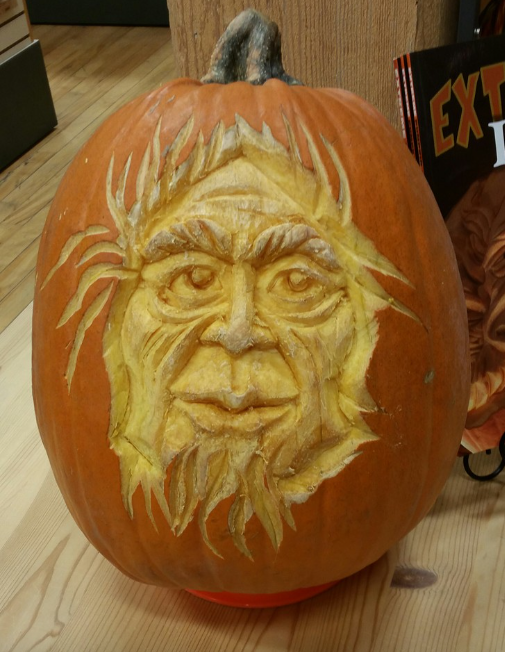
His imagination is limitless: If it leaves a mark on canvas or any surface, he will explore it. If given the opportunity he will turn shapeless objects into a desired shape using whatever tool is available. James has published cartoons, courtroom sketches and oil paintings. He has won 1st place in two snow sculpting contests, 1st place in one pumpkin contest, and a People’s Choice award for ice.
Cook depicts his visual arts venues like a musician describing his next gig. As the visual music fades in one area, he begins another. As a touring ephemerals sculptor, James ranged further and further afield until a variety of Canadian venues and one in Europe had been visited: The Smiltis Skulpturu Park sand gig in Jelgava, Latvia.
The Smiltis Skulpturu gig was the only one to seem to come out of the pandemic so unabashedly. It was the surprise of 2022 with just 2 months between receiving the invite by email, the acceptance of his entry, and completing the project for an otherwise barren 2022 season.
He normally has these events booked 3 or more months ahead of time and has multiple stops booked. Cook hopes to sculpt in Latvia again in 2023 with an artist’s residency there, or find other European sand gigs in close proximity on the calendar to the Smiltis Skulpturu event.
James Cook’s art is spontaneous and even he can’t fully predict what his own entry will be. It could follow a theme chosen by the event that he is sculpting for, or a controversial media subject. Or he might develop a theme inspired by a happenstance word or action of someone else. Or the theme could be based on his own experiences.

His process begins with a question: Can it be made with the type of material proposed? For a sand sculpture, the three dimensional design must stay “inside a pyramid” for obvious reasons.
When using stone Cook wants to make small sizes, unless he has good lifting devices for moving the weightier pieces.
Snow varies wildly in texture and feel with temperature and humidity and the structure and the artist must comply with those conditions of wetness or coldness.
Ice is absolutely seductive, but it is easily fractured. The number one critical objective is not to bump it while at work. A small break on an ice project might be fixable, but he’s seen disaster and complete projects crumble within the last minutes before the competition end bell. James is stoical – It happens, a part of learning what the medium can and can’t do.
Ephemeral sculpting is an outdoors occupation. Winter brings cold and blizzards, and Yellowknife is definitely best taken on with a down-fill parka. In Jelgava, November weather prevailed with high winds and heavy rain. James’ sand project there failed, but for him the experience was priceless. It made him determined to tame that moody Baltic sand. Summer sand sculpting calls for a wide-brim hat, UV protection, and sometimes, a good rain coat.
James lives with Asperger’s syndrome and is ADHD-Inattentive, and these symptoms were not revealed and treated until this advanced stage in his life. He lived a mostly marginalized life over the years, his working and professional life had looked like some kind of Wile E. Coyote with a checkered employment history and an art career that faltered more than flourished. Cook closed his door on all conventional means after losing his last job, and dove full time into the visual arts, knowing the sacrifices and what he was going to have to do. As he explained ‘’I am good in the visual arts, and I know it. Nobody can take that away from me’’.
Looking forward he states ‘’I’ve had one offshore gig now, and there will be more. I have a diploma in graphic design, and I’m looking at another in animation, a venture that will add digital and cinematography to his repertoire of mediums. Now that I’m into my 60’s, visual arts will be my hustle until they find me horizontal with a chisel in my hand.”
For those who would consider sculpture, Cook advises that you need the drive. To alter the shape of something by whittling, chiselling, or moulding is usually instinctual and spontaneous. ‘’Follow your heart. Educational options vary from day courses in wood and stone carving, and blacksmithing to a college diploma in a creative field. It is your personal choice. How much attention do you wish to pay to the trade and how far do you want to go. It’s like that AC/DC song, “It’s a long way to the top…’’
James does not have any pieces in galleries at this time as he operates mainly as a roaming artist (no permanent studio) and mostly works exterior venues in winter and summer. He does hope to explore stone sculpting further and build an inventory.
Facebook Page:(11) James W Cook | Facebook
Posted in art classes, Art Shows, Art Workshops, Artist of the Month, Canadian Stone Carving Festival, Miscellaneous
Tagged ephemeral art, Ephemeral Artists, Ice sculpture, James Cook, james w. cook, National Capital Network of Sculptors, National Gallery of Canada, Ottawa Art Community, ottawa art events, ottawa art gallery, ottawa artists, Sand Sculpture, Sculpture, Snow Sculpture, stone sculpture
Leave a comment
Artist of the Month, Bernadette Alcock, Lifelong Exploration
by Sandra Marshall

Bernadette Alcock holds fast to the creative drive of her family. She has great love and respect for the crafts that her mother and grandmothers taught her. Equally important, these women showed her that for a successful life, one should never give up. Bernadette considers herself fortunate to have been surrounded by these strong women. They lived the notion that success is about feeling good about yourself.
Bernadette has travelled from coast to coast in Canada and abroad, with opportunities to spend vacations in warm-weather seaside locations. Wherever she went, she sought out art galleries to learn and explore on her journey. Her passion for learning and creating continued in graphic design, business analysis, social media marketing, chocolate making, landscape design, gardening: All types of art, be it painting, felting, fused glass, knitting, or sculpting.
Bernadette pays close attention to her environment and observes what others may overlook. Nature’s energy inspires her, and she becomes engrossed in the subject she is sculpting, forgetting all else. Continuous learning is another important part of her process. An example is her discovery of liquid polymer medium which was developed in Europe in 2012. Bernadette has been captured by its sculpture potential- learning the techniques through in-person workshops and perusing the literature and art magazines. She became a certified instructor in 2014 and has led many workshops. During Covid, Google became her best avenue in finding online workshops and inspirational ideas.
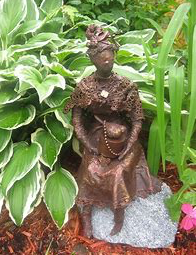
Bernadette enjoys the three-dimensional possibilities of liquid polymer and wire sculpture. And she also relishes transforming objects and recycling from natural fabrics and old jewellery. In fact, any natural product: wool, hair, leather, even floral all inspire her compositions. Her creations are fun, decorative pieces in the home -or in the garden where the polymer medium protects them from the outdoors. Up cycling for Bernadette is a fun way to not only reduce waste and carbon footprint. She can look an object that has seen better times and give it a new life, a reward for her. Bernadette loves creating sculpture.
Paverpol and Powertex are the two main polymer products Bernadette uses. They are eco-friendly, non-toxic textile hardeners developed for natural fabrics. Her boundless imagination finds the possibilities to be endless. As a universal medium for all artwork, sculpture, painting, and decoration, it can be used on canvas, textiles, paper, cardboard, plush, leather, fiberglass mat and all natural materials. The polymer can be perfectly combined with self-hardening clays, concrete, stone, ceramics, wood, sand, stone, even waxes.
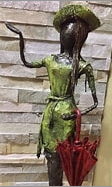
Her portrayal of women, young and old, suggests the historical inequality between the sexes, her way to ensure that gender equality remains a focus. She shows children as free spirits with expressive character and enthusiasm. Her days are brightened when creating them.
Bernadette prefers to create with her own ideas and feels more freedom to experiment with subject and mood. When she started the sculpture process, women and children were always her source of inspiration. Everyday life- sports, music, and dancing – was the source that was integrated into her work. She selects bronze or black as the base polymer colours, which she enlivens with added colour and detail, part of her unique style. She often employs many different types of fibres in her sculptures. Their texture adds enticing detail to work.
Perhaps it is the functional mechanisms of clocks and bicycles which pique Bernadette’s curiosity. She adds them to her collection for possible incorporation into her work, where they become functional, eye-catching ensembles. Bikes also embody asense of adventure and exploration, the thrill of riding free of cars and experiencing breathtaking views. Bernadette sees the bicycle as a powerful symbol of hope. Riding a bike spurs her creative process, connecting landscape with art and design. Bicycles symbolize that intersection.
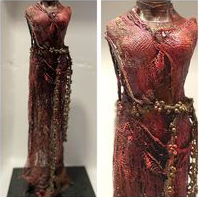
Often, an art enthusiast hesitates to bring a sculpture home because of a perceived limitation of placement. Bernadette suggests that how one displays a three-dimensional piece is often as important as the artwork itself. It can sit on a pedestal, shelf, be suspended from a ceiling or integrated into the outdoor landscape.
To start in the liquid polymer medium Bernadette says ‘’Start with an idea! ‘’ No matter what the subject, even abstract, think about the story of how it got in that position, what happens after that moment in time? Good Art flows from good design. I would estimate that by the time I start building a sculpture I’ve spent as many hours designing it (in my head) as it will take to physically build it. Secondly, think about how to make it structurally sound.
I use wire to build my armatures. The wire armature is key to the success of my sculptures as it not only holds the sculpture up but it’s the armature’s pose that will tell the story you want your sculpture to tell. The armature also performs a very practical role in that it holds your sculpture up. Therefore, you need to make sure that you build in any structural elements necessary to support the weight of the sculpture or any extensions to the sculpture. I.e. any objects that you figure may be holding or carrying. Wire is a magical support for this medium because it can support the light weight of the polymer medium and has the flexibility to allow the many gestures that the sculpture can assume.
Be brave, experiment, the possibilities are endless! There are no mistakes in art, and many happy accidents. The sentiment that Bernadette feels when it is complete is joyous.

Bernadette connects with others at art exhibitions through conversations about her process- idea-conception-building. Each sculpture’s story and energy engage people to identify with it and to share it with others. Those connections are strongest when children are part of her piece, reminders of a child or grandchild. Each time a new member arrives into her family, a new sculpture is requested. Faces light up with happy nostalgia when Bernadette incorporates a special vintage toy or childhood object.
Commission work is often intimidating for Bernadette, as she wants to connect with the client’s emotions and thinking. First connections are the rock on which understanding grows. Talking about reference photos, questions about details and intended placement are all important to better understanding. People want to take pieces home because of an emotional bond, a cherished memory. It is a thrill and breath-holding experience when clients first see their commissioned piece.
You can see more of Bernadette’s work at https://www.gardeninspirations.ca/gallery
Posted in art classes, Art Shows, Art Workshops, Artist of the Month, Canadian Stone Carving Festival, clay artists, clay sculpture, Exhibition Opportunities, learn how to sculpt, Member Event, Member Profiles, Metal Art, Miscellaneous, Network Show, Online Art Gallery, paverpol, polymer clay, sculpting workshops, Sculpture Atelier, Sculpture events, sculpture show, Stone Carver, stone sculpture, The Boys and Girls Club of Ottawa, The national capital network of sculptors, workshops
Tagged art, Bernadette Alcock, DArtisti Gallery, Figurative Sculpture, Local Artists, nak gallery, National Capital Network of Sculptors, Ottawa Art Community, ottawa art events, ottawa art gallery, ottawa artists, ottawa local artists, paverpol, polymer clay, Powertex, Sculpture, three-dimensional
Leave a comment
Artist of the Month – Terry Schaub, Stone Sculptor
by Sandra Marshall
A most important aspect for Terry is that his sculpture tell a story – to inspire, to captivate, and draw people in – to ask questions. He wants the work to have an intention and a feeling and hopefully elicit a response. A great example of that is when he noticed a young boy stick out his tongue in response to the outstretched tongue of a sculpture. He loves that his works raise a reaction from the viewer.
The love for the work was soon recognized by galleries and collectors. In 2006 he had his first show. Since that time he has been in multiple galleries and has seen his pieces bought by collectors from around the globe. In 2011 his piece, “It’s The Little Things”, was presented at the United Nations Convention on Biological Diversity and now resides in their Museum of Nature and Culture in Montreal. The next year, he was commissioned by CFB Trenton to commemorate the return of a WW2 bomber to its home base. The stone sculpture which was presented to HRH Prince Edward for his private collection.
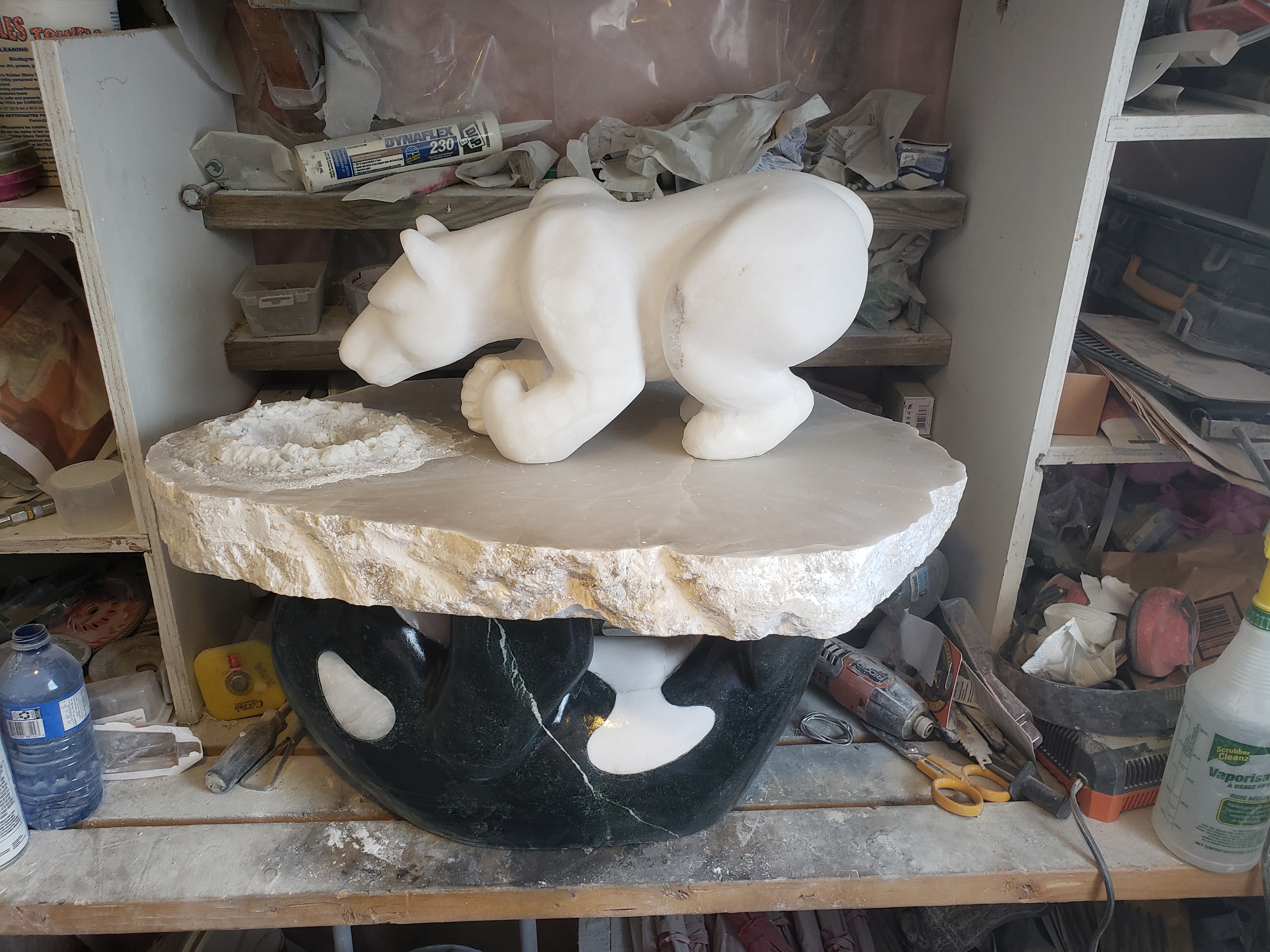
Terry started buying rough stone from Ottawa suppliers and then built himself a studio, attached to his home. In time he started importing stone from different countries. He warehouses a large quantity of rocks from which he selects the one which most speaks to him through its veining, incidental colours, form and size. He might sketch some ideas on paper and sometimes, to get the creative juices flowing, he may mark the stone with a sinuous line to set his cutting direction. Making bigger pieces is a challenge that makes him happy. For the crouching-bear-and-orca piece that he is working on now, the ice slab alone weighs 80 pounds.
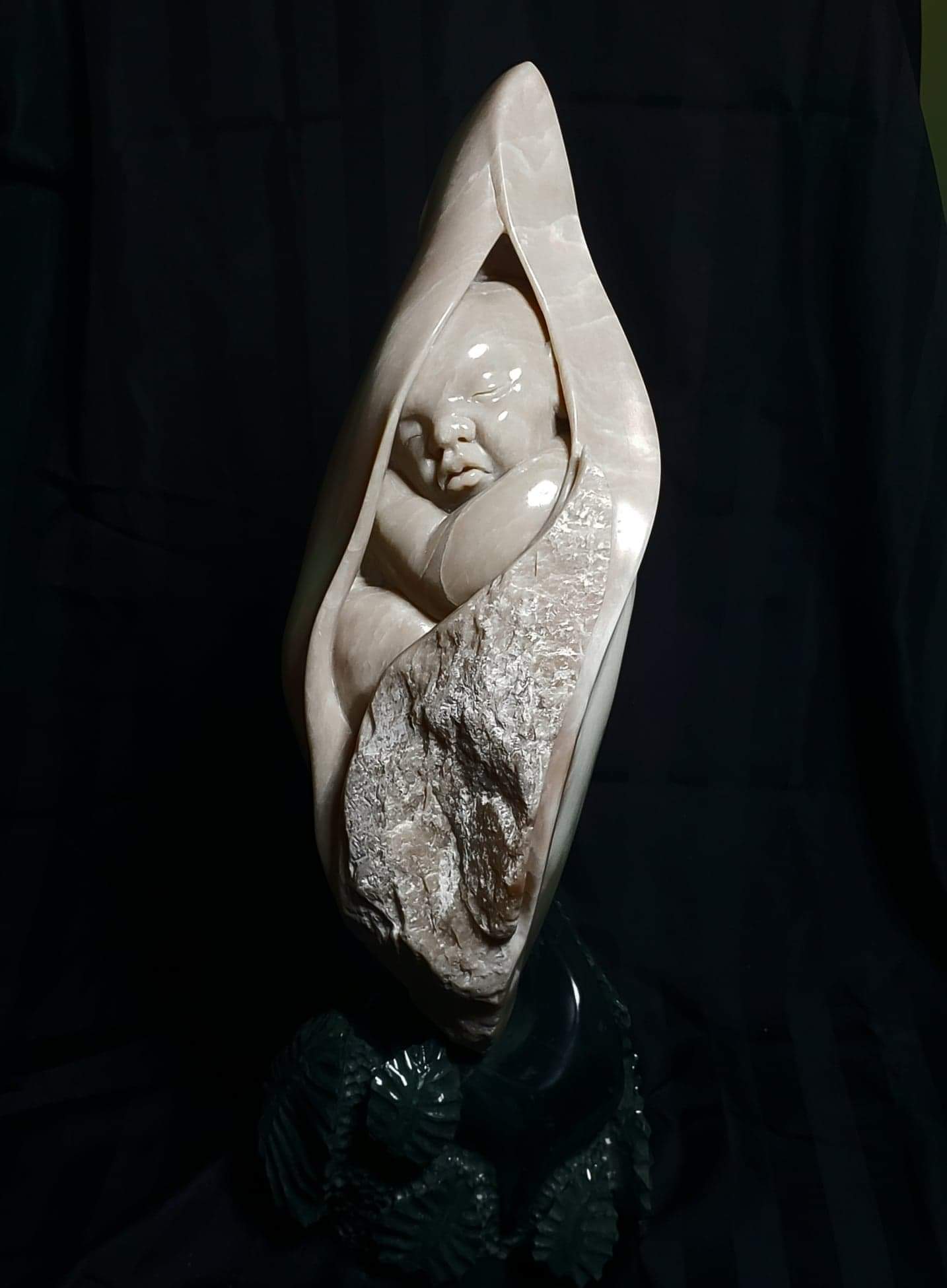
In 2019 at age 52, Schaub required major surgery for metastasized cancer. He spent the next day, his 53rd birthday, in a hospital bed wondering if he was going to live. He credits his wife, Kelly, for the fact that he did survive. Recovery was long and hard. It was another turning point for his life and his art.
Though he was putting almost full-time hours into the art at that point, he decided to leave 3M and make art his sole focus.
Each stone has unique qualities: East Indian soapstone has an incredible variety of colour. The harder stones such as alabaster, chlorite and fluorite are more challenging to carve. All of the stones take a commitment of time. The harder the stone, the more intricate the carving, the more time it takes to complete the piece. Once the rock is chosen, the hard work begins. He studies it for its shape, balance, contours, holes and other features.
Terry Schaub feels at peace when he is carving. He might work from early morning without breakfast and rarely stops for breaks. One day he was in that flow and remembers when his wife came to knock on the door and asked him if he had finished yet. He thought that it was almost suppertime. She surprised him by saying ‘’No, its midnight.’’
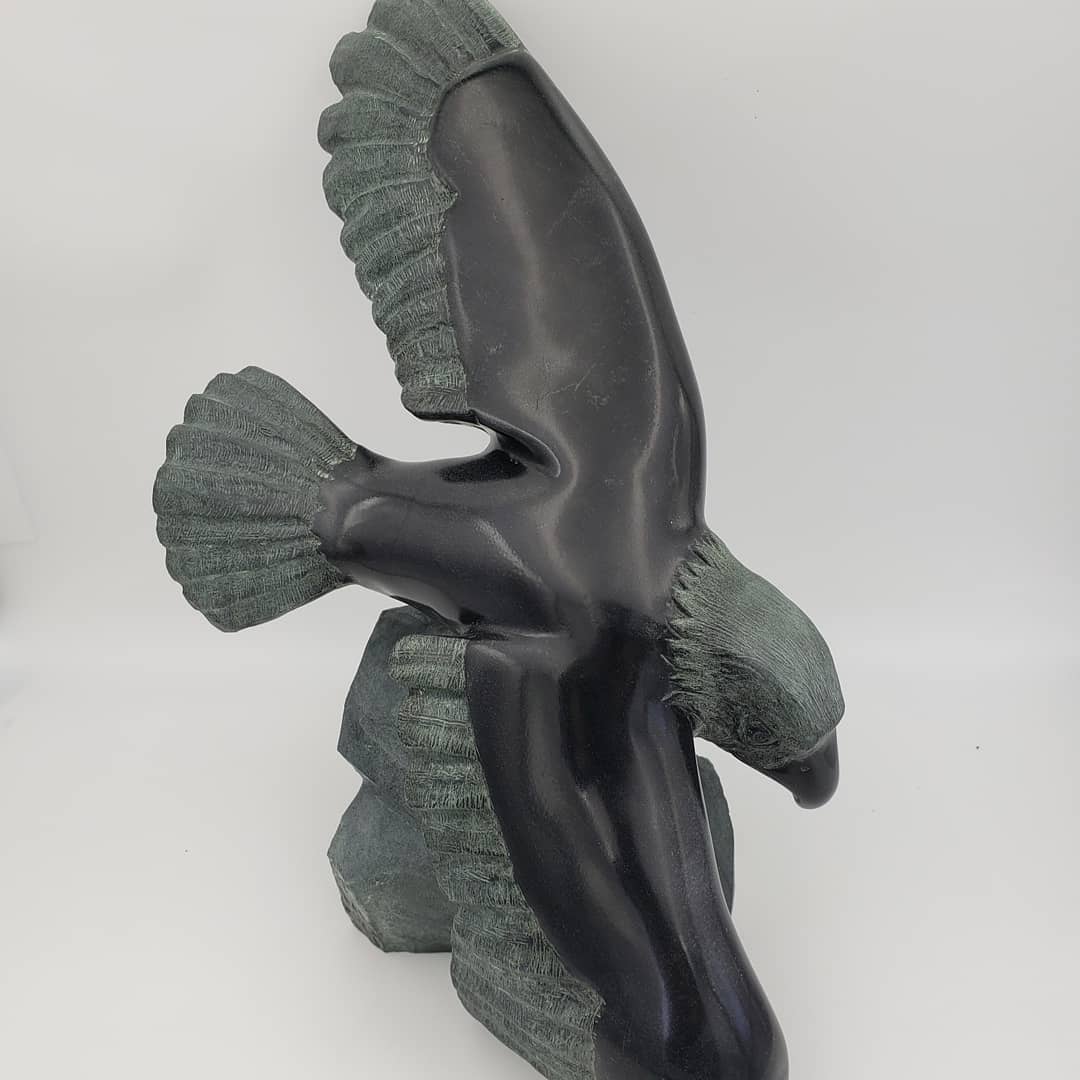
Rough shaping begins with reciprocating saws and a large angle grinder with an 8 inch diamond blade. Then he might use an electric Foredom tool, for which he estimates he has about 200 bits, and shaped files called rifflers for smaller details. Then a marathon of sanding starts- often more than a week to work through different coarseness of sandpaper from #200, #300, #400 grit to the finest #2000 as he smooths the surfaces. It has taken him time to appreciate the long periods of sanding. The small changes made by each higher grit becomes a lesson in patience and a time for reflection. Then he reaches the magic time when the sheen appears on his sculpture. Polishing brings out the colours and veining. He adds beeswax, tung or linseed oil, clear coat lacquer or rendered fat to give the work a sheen and bring out the rich colours that the rock previously lay hidden.
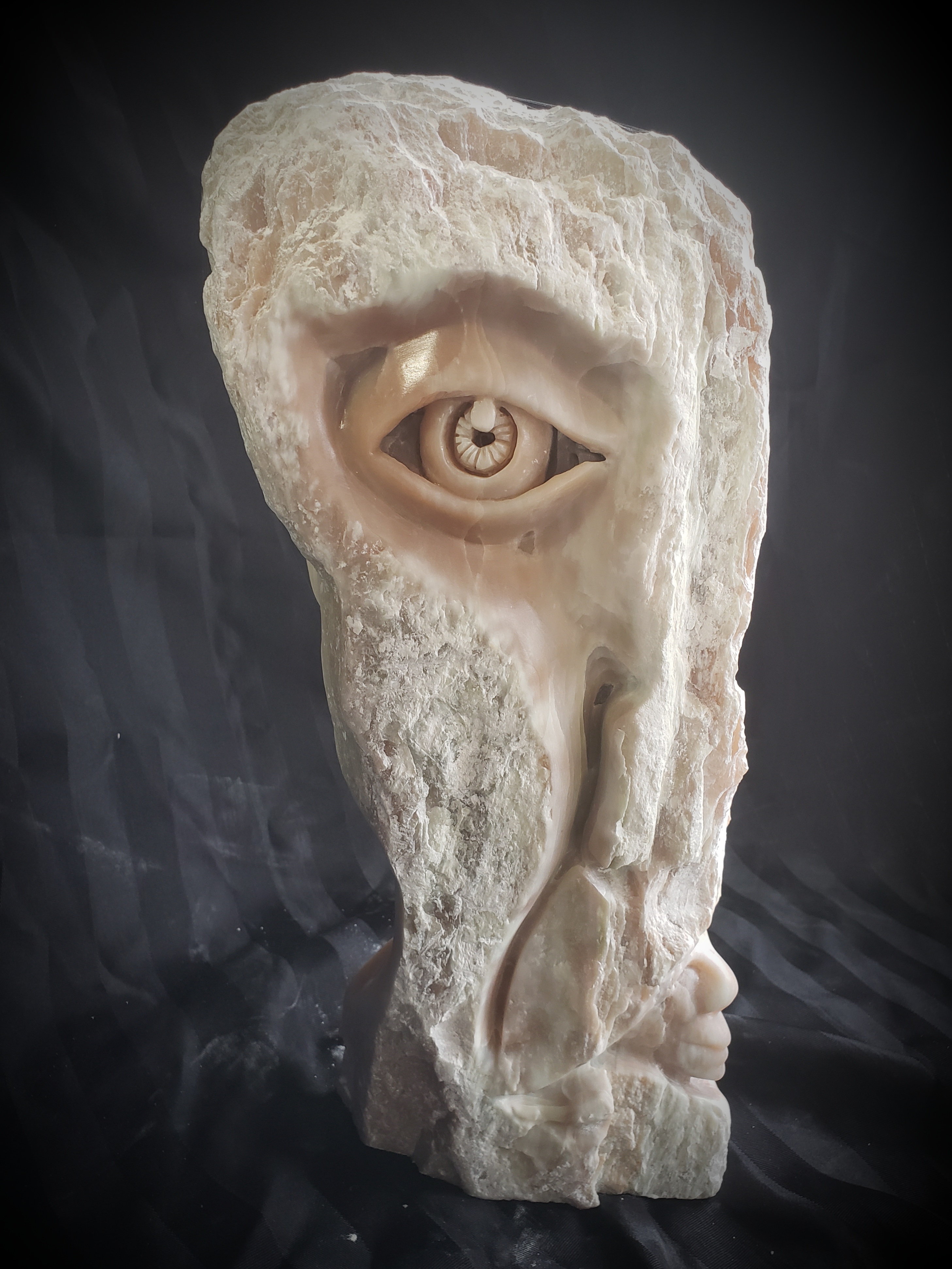
Terry has exhibited his work in at NCNS show in the Museum of Nature many other galleries such as OWAA , Shenkman Art Center, Gallery on the Lake, Remington Art Museum in NY, O’Connor Gallery, Gallery 6, NAK’s Ottawa Gallery and Patrick John Mills.
As most artists know, Covid stalled everything. People were not spending on art, so it is now a time to reboot with new works.
Terry suggests that, to a newcomer to this art, education and experience are not necessary to start the journey, but the love to create is essential. Persistance is required!
For more of Terry’s work visit:
https://www.facebook.com/terry.schaub.37

Posted in art classes, Art Shows, Art Workshops, Artist of the Month, Canadian Stone Carving Festival, clay artists, clay sculpture, Exhibition Opportunities, Member Event, Member Profiles, Network Show, Online Art Gallery, sculpting workshops, Sculpture events, sculpture show, Stone Carver, stone carving, stone sculpture, The national capital network of sculptors
Tagged art, Local Artists, nak gallery, National Capital Network of Sculptors, National Gallery of Canada, Ottawa Art Community, ottawa art events, ottawa art gallery, ottawa artists, Sculpture, stone sculpture
Leave a comment


 National Capital Network of Sculptors